


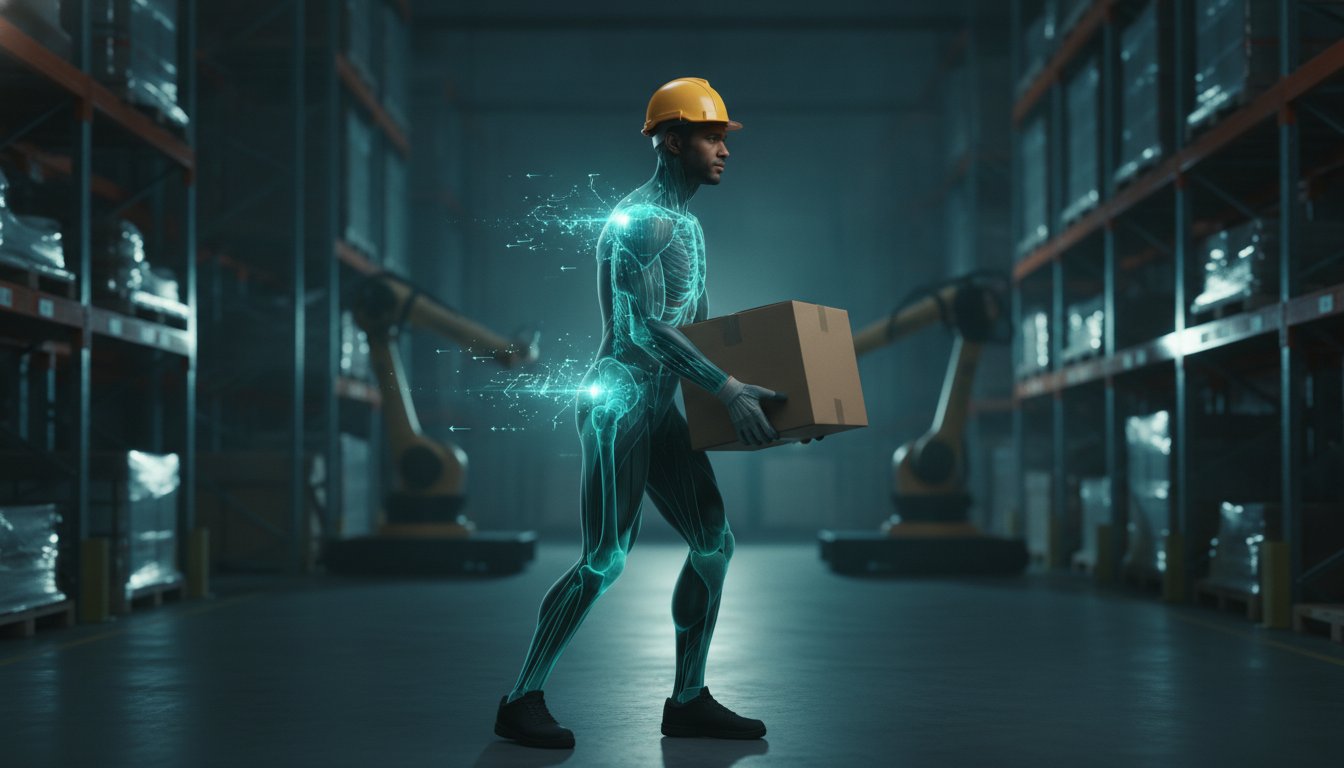
U.S. employers lose over $500 billion annually to a single, preventable category of injury. It's a staggering figure that reflects more than just medical bills; it represents a systemic operational failure. You've likely seen the symptoms in your own facility: rising workers' compensation claims, persistent absenteeism among warehouse staff, and the clear ineffectiveness of manual ergonomic assessments. Traditional safety protocols often fail because they're fundamentally reactive. True musculoskeletal disorder prevention requires a shift from manual guesswork to precision.
Safety shouldn't be a cost center. It's time to move beyond the limitations of outdated checklists and implement a data-driven, proactive framework designed for high-risk environments. This guide explores how to leverage ergonomics risk intelligence to eliminate hazards before they manifest as recordable injuries. You'll discover how to secure a sustainable culture of prevention while generating the data-backed proof of ROI that the boardroom demands. We're moving from manual observation to systemic transformation.
Industrial safety is at a crossroads. Traditional reactive models are failing to contain the escalating costs of physical strain. Musculoskeletal disorders (MSDs) represent a systemic breakdown in how we manage human movement within high-velocity environments. These injuries affect muscles, nerves, tendons, and joints, typically resulting from repetitive, systemic physical strain. In the high-stakes world of modern logistics, these aren't just medical issues. They're operational bottlenecks that erode the bottom line.
The financial impact is deceptive. Direct medical expenses are merely the visible tip of the iceberg. Research indicates that indirect costs, such as absenteeism, retraining, and lost productivity, often triple the direct medical expenses. When an injury occurs, the disruption ripples through the facility. Statistics show that injury-related absences lead to an average 36.6% drop in productivity. For warehouse and retail fulfillment centers, these "high-risk zones" are where musculoskeletal disorder prevention becomes a critical financial strategy rather than a simple compliance check.
We're seeing a fundamental shift. Leading organizations are moving away from reactive treatment and toward proactive ergonomics risk intelligence. This transformation treats movement as data. By identifying the bio-mechanical precursors to injury, firms can intervene before a strain becomes a claim. It's about systemic improvement over individual correction.
Lower back injuries remain the primary cause of lost workdays in logistics. They often stem from improper lifting or sustained awkward postures. Similarly, upper limb disorders frequently plague assembly lines, where repetitive motion degrades long-term productivity and increases error rates. Perhaps most dangerous is cumulative trauma. These are "micro-strains" that build up over months of shift work. They're invisible until they reach a breaking point, making them impossible to catch with traditional, periodic audits.
Compliance is no longer the ceiling; it's the floor. Current standards for physical loading and dangerous vibrations provide basic guardrails, but they don't account for the intensity of 2026 fulfillment speeds. High-performance operations now require more than basic adherence to guidelines. They need safety analytics to meet modern ESG goals. Investors and stakeholders increasingly view a company's ability to protect its human capital as a key indicator of corporate health. Effective musculoskeletal disorder prevention is now a core component of operational excellence and long-term brand stability.
Data defines the risk. To implement effective musculoskeletal disorder prevention, we must first quantify the physical stressors acting on the workforce. Bio-mechanics isn't a matter of opinion; it's a matter of physics. When a worker performs a task, their body is subjected to specific vectors of force that, if unmanaged, lead to systemic failure. According to the National Safety Council, these disorders remain a leading cause of work-related injuries, making it imperative to understand the stressors that drive them.
Force is the primary catalyst for spinal degradation. Every heavy lift or forceful exertion places a specific load on the intervertebral discs. In high-speed manufacturing, repetition acts as a physiological ceiling. Even low-force tasks become hazardous when performed thousands of times per shift. This leads to awkward postures, such as reaching or twisting, which create "ergonomic debt." Like financial debt, this physical strain accumulates interest over time, eventually requiring a "payout" in the form of a recordable injury. Contact stress further complicates this, as localized pressure from hard surfaces or tool handles can damage nerves and soft tissue in the hands and limbs.
Measuring these risks requires standardized diagnostic tools. The Rapid Upper Limb Assessment (RULA) and Rapid Entire Body Assessment (REBA) provide numerical scores to evaluate body mechanics and posture. Bio-mechanical load is the intersection of physical effort and time. While force and repetition are visible, duration is the silent multiplier of risk. A task that is safe for ten minutes can become catastrophic when sustained for eight hours without recovery.
Physical risk doesn't exist in a vacuum. In refrigerated logistics, cold environments reduce muscle elasticity, significantly increasing the likelihood of sudden tears or strains. Production pressure and worker fatigue create a dangerous feedback loop; as workers tire, their form degrades, further accelerating the accumulation of strain. For those in mining or heavy equipment operation, whole-body vibration exposure adds another layer of risk, damaging spinal structures and reducing circulation. Identifying these multi-layered threats is the first step toward a more intelligent safety strategy. You can begin this process by utilizing an AI Ergonomics Risk Scan to identify hidden hazards in your facility.
Static audits are obsolete. They provide a false sense of security while risks continue to accumulate on the floor. While the principles of OSHA's Ergonomic Process remain essential for compliance, the manual implementation of these steps is no longer sufficient for high-speed logistics. A safety professional with a clipboard can only observe a tiny fraction of a worker's shift. This creates a "Safety Snapshot" fallacy, where the data collected represents the best-case scenario rather than the reality of a high-volume peak period. True musculoskeletal disorder prevention requires a shift from periodic checks to continuous, data-driven intelligence.
Scaling safety is the ultimate industrial challenge. Manual methods are slow, expensive, and fundamentally unscalable across a global logistics footprint. You can't put a consultant at every station 24/7. This gap between manual observation and operational reality is where injuries happen. By the time a manual audit identifies a risk, the worker has already been exposed to thousands of repetitive cycles. We're moving away from the era of "lifting with your legs" posters and into the era of systemic movement intelligence.
Subjectivity is the primary failure point of traditional scoring. Observer bias often leads to inconsistent risk ratings, making it difficult to compare safety performance across different facilities. Consultant-led assessments are also prohibitively expensive when compared to automated safety analytics. Most importantly, manual audits rarely result in lasting behavioral change because they lack the real-time feedback loop required to correct movement patterns in the moment. They are a diagnostic tool used too late in the process.
AI transforms the safety paradigm. By analyzing raw movement data, AI identifies subtle patterns of strain long before an injury occurs. This is the core of Ergonomics Risk Intelligence. It allows leadership to transition from a reactive "what happened" mindset to a predictive "what is likely to happen" model. Instead of guessing where to allocate resources, you can use data to prioritize capital improvements on the floor, targeting the specific workstations that present the highest risk to your workforce. It's a strategic shift from reactive correction to proactive musculoskeletal disorder prevention.
Data drives transformation. You can't fix what you can't measure. A proactive musculoskeletal disorder prevention strategy begins with a precise baseline. By deploying an AI Ergonomics Risk Scan, you can map systemic strain across your entire facility in days, not months. This isn't a subjective audit; it's a diagnostic map of bio-mechanical risk. Once high-risk zones are identified, tactical interventions allow for the redesign of workstations based on objective movement data rather than intuition. This ensures that capital expenditures are directed exactly where they'll have the greatest impact on worker safety and operational uptime.
Real-time protection is the next evolution. Deploying an AI Ergonomics Coach provides workers with immediate, non-invasive feedback on their form. This prevents the "silent" accumulation of micro-strains discussed in previous sections by correcting risky movements in the moment. Finally, continuous optimization ensures that safety analytics are used to refine workflows over time. This prevents "risk migration," a common pitfall where solving a problem at one station inadvertently creates a new hazard elsewhere in the line. It's a cycle of constant improvement that keeps pace with 2026 production speeds.
Engineering controls represent the most effective tier of the hierarchy of controls. The objective is simple: eliminate the hazard. By redesigning layouts to minimize reaching, twisting, and overhead work, you remove the physical requirement for dangerous movement. Mechanical assists, such as lift tables, conveyors, and vacuum lifters, should be deployed at any station where forceful exertion exceeds safe bio-mechanical limits. When the workstation is engineered for the human body, the risk of injury drops by default, directly addressing the 36.6% productivity drop often seen after an injury occurs.
Administrative controls and Training 2.0 bridge the remaining operational gaps. Traditional training fails because it's too infrequent and generic. Modern strategies use data to implement intelligent job rotation, balancing high-strain tasks with low-strain duties to ensure recovery periods are built into every shift. Dynamic training replaces static sessions with real-time, context-aware feedback. This fosters a "self-correction" culture where workers use transparent risk data to adjust their movements before pain starts. This is how you build a sustainable culture of musculoskeletal disorder prevention that resonates from the warehouse floor to the boardroom.
Intelligence is the new safety standard. Modern AI Ergonomics Platforms transform raw movement data into actionable safety intelligence, moving beyond the simple observation of hazards to the active prediction of risk. This technological leap allows the AI Ergonomics Coach to provide non-invasive, real-time protection, correcting bio-mechanical errors as they occur on the floor. It's a fundamental shift in musculoskeletal disorder prevention. By focusing on aggregate risk data rather than individual surveillance, these systems protect worker privacy while providing the diagnostic depth required for industrial-scale safety. The ROI of prevention is undeniable; lower injury rates lead directly to improved operational throughput and reduced overhead.
Precision replaces guesswork. When safety leaders can link movement data to specific operational outcomes, the business case for ergonomics becomes irrefutable. Research indicates that employers who integrate digital solutions for musculoskeletal care report savings of $3,177 per member per year. This isn't just about avoiding a $15,000 to $85,000 per-case injury cost. It's about stabilizing the workforce and ensuring that productivity doesn't suffer the 20% to 40% drop associated with presenteeism. Data-driven safety is no longer a luxury; it's a requirement for high-performance logistics.
AI doesn't replace the safety professional; it empowers them. AI Ergonomics Platform complements traditional safety walkthroughs by providing a continuous stream of objective data that human observation simply can't match. This allows EHS managers to use data-driven insights to justify safety budgets to the C-suite, showing exactly where investments will yield the highest returns. Scaling from a single pilot to a global safety standard becomes a matter of data replication rather than manual retraining. It's how organizations move from localized safety efforts to systemic excellence.
WearHealth provides the advanced infrastructure for this transformation. The WearHealth AI Ergonomics Platform is specifically engineered for the rigors of logistics and manufacturing, turning wearable sensor data into a shield for your workforce. By implementing real-time ergonomics monitoring, our partners see significant reductions in LTI rates and absenteeism, directly impacting the bottom line. We bridge the gap between warehouse movement and boardroom strategy, ensuring that your most valuable assets are protected by the most advanced intelligence available.
Discover how WearHealth's AI Ergonomics Coach can protect your workforce.
Manual observation is no longer enough. High-speed industrial environments don't have the luxury of waiting for an injury to occur before taking action. Effective musculoskeletal disorder prevention requires a systemic shift toward continuous, data-driven intelligence. By treating worker movement as a measurable operational metric, you eliminate the "safety snapshot" fallacy and replace it with a proactive shield. It's about moving from reactive correction to predictive excellence.
Global leaders in logistics, manufacturing, retail and mining already trust these advanced safety analytics to protect their workforce while maintaining peak throughput. It's possible to reduce high-risk strain by up to 78% through targeted, non-invasive intervention. This transformation is 100% data privacy compliant, ensuring that your path to operational excellence respects the individual while securing the collective health of the organization.
Contact an ergonomic expert today to identify hidden hazards and secure your bottom line. Take the first step toward a culture of sustainable prevention and operational resilience.
Systemic physical strain is the root cause of these injuries. It occurs when the physical demands of a specific task exceed the bio-mechanical capacity of the worker. High-speed environments exacerbate these risks by forcing repetitive cycles, forceful exertions, and awkward postures. These factors create cumulative trauma that eventually manifests as a recordable injury if left unmanaged by proactive safety protocols.
Musculoskeletal disorders degrade operational efficiency through a combination of direct and indirect expenses. While medical claims are visible, the hidden costs include a 36.6% average drop in productivity due to injury-related absences. Presenteeism also reduces output by 20% to 40% as workers struggle through pain. These disruptions compromise throughput and increase the logistical burden on management, eroding the bottom line.
AI identifies the bio-mechanical precursors to injury by analyzing raw movement data in real-time. This allows for musculoskeletal disorder prevention by flagging high-risk behaviors before a strain occurs. Instead of waiting for a recordable incident, safety leaders can intervene based on predictive patterns. It transforms safety from a reactive response into a proactive, data-driven strategy that scales across global operations.
An ergonomic audit is a static snapshot of a facility at a single point in time. It's often subjective and misses peak-strain periods during high-volume shifts. In contrast, ergonomics risk intelligence provides a continuous stream of objective data. It leverages safety analytics to map risk across entire shifts, capturing the variability that manual stopwatches and clipboards inevitably overlook during a traditional audit.
The AI Ergonomics Coach is designed to be non-invasive and respects worker privacy. It focuses strictly on anonymized risk data and movement patterns rather than individual surveillance. Workers receive immediate haptic or visual feedback to correct their form, which empowers them to protect their own health without feeling monitored. It's a tool for professional safety improvement, not a tracking device for management.
Significant ROI is often realized within the first twelve months as injury rates and absenteeism decline. Employers utilizing digital health solutions for musculoskeletal care report annual savings of $3,177 per member. By reducing the frequency of $15,000 to $85,000 per-case injury claims, the platform pays for itself through avoided direct costs and stabilized operational throughput across the facility.
Lower back injuries are the most prevalent, often resulting from improper lifting and sustained trunk flexion. Upper limb disorders, including tendonitis and carpal tunnel syndrome, are also frequent in assembly and fulfillment roles. These conditions stem from high-frequency repetition and localized contact stress. Addressing these through musculoskeletal disorder prevention is essential for maintaining a high-performance manufacturing line and a stable workforce.
Prioritize high-impact interventions by identifying your facility's "hot spots" first. An AI Ergonomics Risk Scan can quickly map the areas of highest strain, allowing you to allocate limited resources where they'll have the greatest effect. Focus on low-cost engineering controls and job rotation strategies based on this data. Targeted intelligence ensures that every dollar spent directly reduces the risk of expensive recordable injuries.
mehr Einblicke
August 18, 2026
How can warehouse managers determine whether an ergonomics tool will work in their operation? Learn how to evaluate solutions through real-world pilots, usability, workflow integration and privacy.
August 17, 2026
What can manufacturers learn from Nissan’s investment in ergonomics? Explore why physical workload is becoming an important part of production and workstation design.
