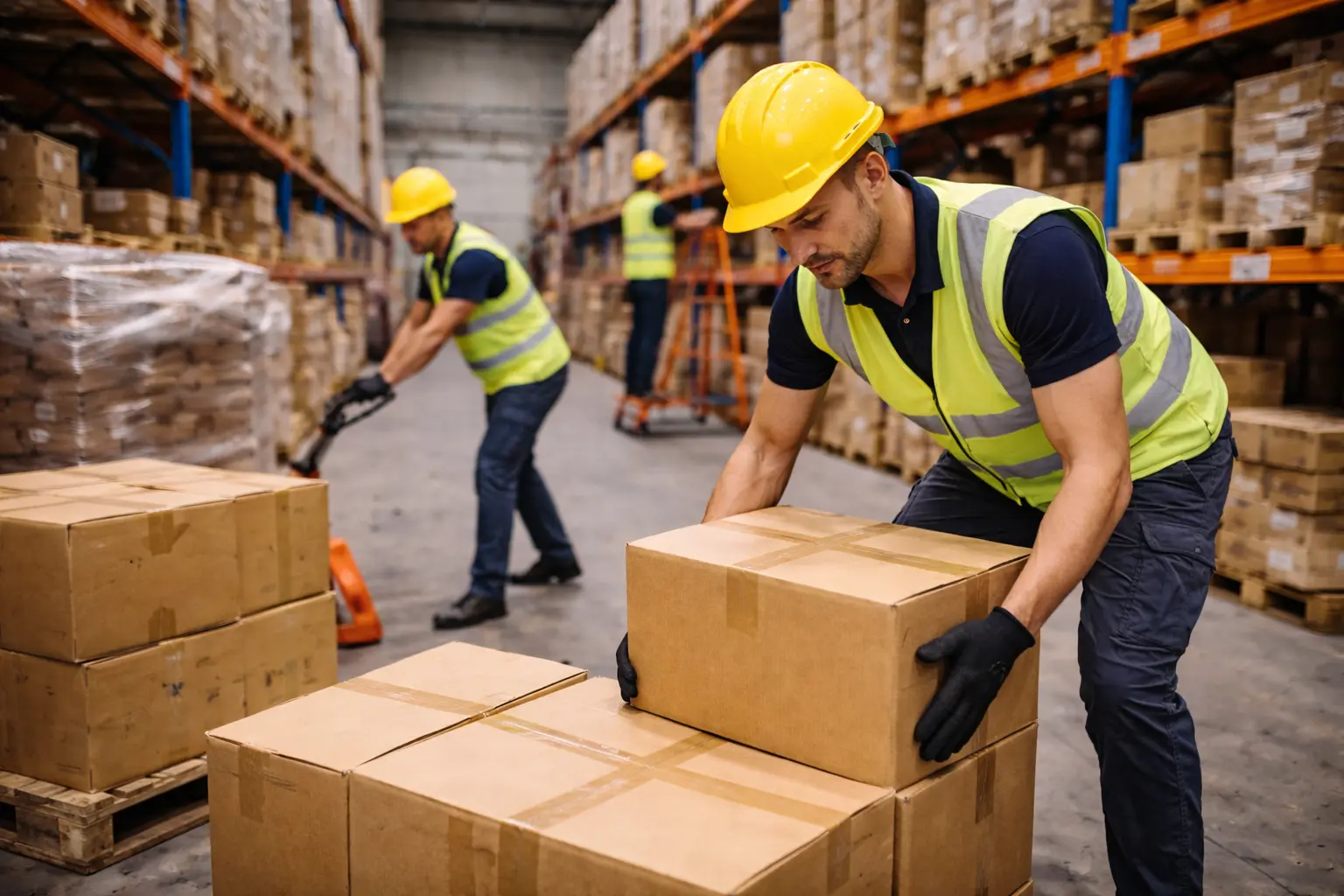
How Manual Handling Leads to Injuries in Warehouse Operations
Warehousing and distribution operations run at high speed, with workers constantly picking, packing, lifting, twisting and moving goods across the warehouse floor. These repetitive warehouse manual handling tasks and time pressure during shifts, place continuous strain on the back and shoulders. From palletizing and loading at the dock to goods-in and goods-out processes, workers are exposed to awkward postures and repetitive movements throughout the day.
The impact on warehouse operations
- High risk of warehouse back and shoulder injuries from repetitive lifting and handling.
- Reduced workforce performance and picking efficiency.
- Increased downtime across warehouse operations.
- Rising absenteeism and labour shortages.
Stop injuries before they slow down your warehouse
- Track how lifting, picking, and other warehouse manual handling tasks are performed across shifts and zones.
- Understand how repetitive movements impact fatigue and injury risk.
- Identify high-risk movements and prevent injuries in warehouse operations
- Improve warehouse ergonomics without slowing throughput