


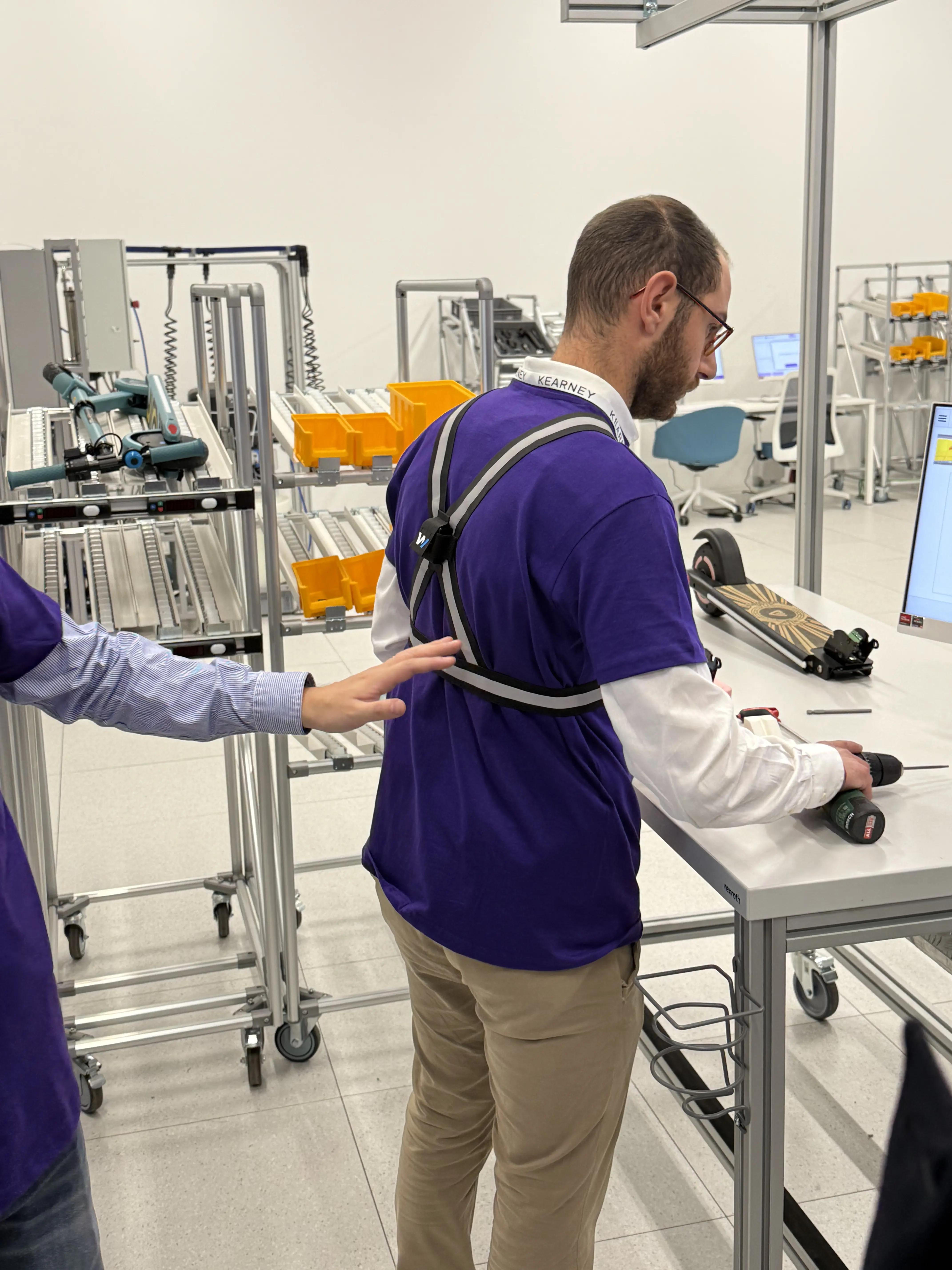
With the opening of the Kearney Industrial Innovation Space (K-IIS), a dedicated environment has been created where companies can explore how to tackle the most persistent challenges of industrial transformation.
Across sectors, organizations face similar obstacles:
strategy-to-execution gaps, talent shortages, unclear ROI from digital initiatives, overwhelming technology landscapes, increasing regulatory and sustainability pressure, and cultural resistance to change.
The K-IIS was designed to bridge these gaps — not through theory, but by turning solutions into real, hands-on experiences.
What makes the Innovation Space unique is its strong focus on practical impact.
It addresses the issues companies deal with every day: boosting productivity, strengthening resilience, reducing reliance on manual labor, improving ergonomics, increasing capacity flexibility, and enabling greater supply chain transparency.
The space brings three building blocks together:
Visitors can explore more than 40 real-world use cases across manufacturing and logistics — from ergonomic simulations and wearables to cobotics and predictive quality tools.
The space highlights solutions such as:
This showcases a clear industry shift:
Ergonomic risk is no longer an operational side topic — it’s becoming a strategic lever for workforce health, productivity, and long-term resilience.
We had the opportunity to join the official opening of the Kearney Industrial Innovation Space and present our AI Ergonomics Coach as part of the ecosystem.
Our solution enables organizations to understand and reduce ergonomic risk through real movement data — directly on the shop floor, in real time, without surveillance.
Our contribution includes:
This reflects the type of human-centered, data-driven transformation the K-IIS aims to accelerate.
The Innovation Space demonstrates how essential collaboration has become:
business leaders, technology partners, researchers, and operators working together — not in silos.
We’re excited to be part of this ecosystem and look forward to contributing to discussions on how AI and ergonomics can support healthier, more sustainable workplaces.
More Insights
October 16, 2026
HSE teams cannot address every ergonomic risk at once. Discover four factors that help managers set priorities and make better-informed workplace safety decisions.
August 18, 2026
How can warehouse managers determine whether an ergonomics tool will work in their operation? Learn how to evaluate solutions through real-world pilots, usability, workflow integration and privacy.
