


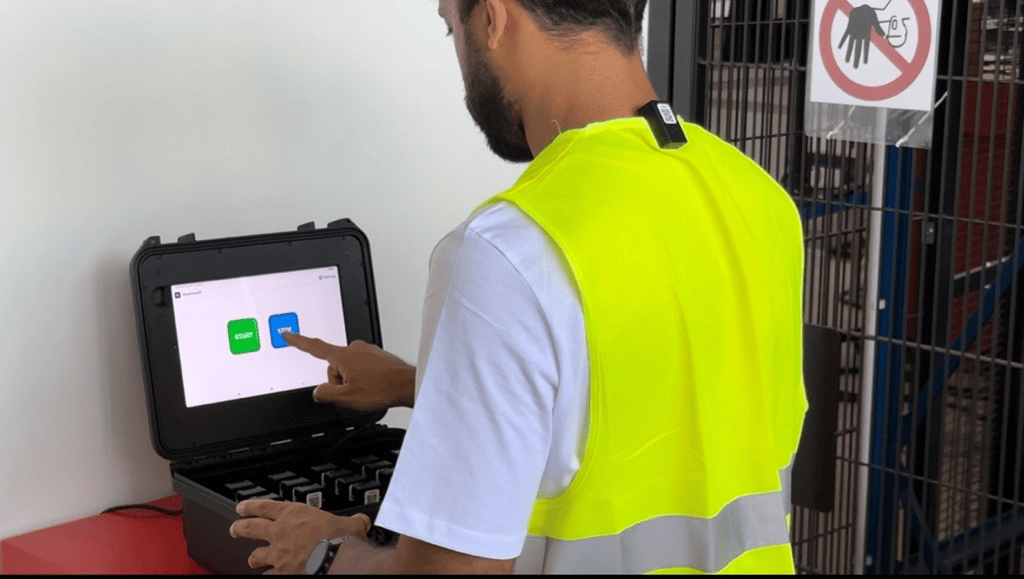
We’re thrilled to see WearHealth mentioned in the latest issue of Connected Magazine as part of the article “How AI wearable technology is transforming workplace safetyin the UK”.
At WearHealth, our mission is clear: to prevent workplace injuries before they happen — using AI-powered wearable technology tailored for logistics and industrial environments. The Connected magazine highlights how innovations like ours are reshaping safety strategies.
Musculoskeletal disorders (MSDs), caused by lifting, twisting, repetitive movements, and awkward postures, are still the leading cause of work-related absence across Europe and globally. Traditional training and observation-based methods often fail to capture the real exposure and individual risk of workers on the floor.
That’s where AI-powered wearables step in.
WearHealth uses lightweight, sensor-based wearables to capture real-time movement data. Our AI then evaluates ergonomic risks using scientifically validated models such as RULA and REBA. Here's what makes it powerful:
Results show improved posture awareness, reduced fatigue, and stronger engagement in safety culture. This not only prevents injuries, but also supports workforce well-being, sustainability and performance.
AI isn't just hype — it’s already being used to transform physically demanding workplaces. With real-time ergonomics and actionable insights, companies can:
📖 Featured in: CONNECTED Magazine – Issue 13
🗞Article: “How AI wearable technology is transformingworkplace safety in the UK” (Page 35)
🔗https://connectedmagazine.co.uk/connected-issue-13/
How does wearable AI detect ergonomic risks?
Wearable sensors track body movement and repetition. AI algorithms compare this data with ergonomic assessment models to identify risky postures and behaviors.
Is real-time feedback disruptive to workers?
No. Feedback is delivered via gentle vibration or visual cues and is designed to support awareness — not distraction.
Is personal data tracked?
No individual identification is required. All data is anonymized and aggregated, respecting GDPR and privacy policies.
How quickly can companies see results?
Most pilot programs show measurable behavior changes within 2–3 weeks, with immediate awareness improvements.
If your company operates in logistics, manufacturing, or industrial services and is looking for ways to reduce physical strain and prevent injuries, we’d be happy to show how AI-powered ergonomics can fit your workflows.
More Insights
August 18, 2026
How can warehouse managers determine whether an ergonomics tool will work in their operation? Learn how to evaluate solutions through real-world pilots, usability, workflow integration and privacy.
August 17, 2026
What can manufacturers learn from Nissan’s investment in ergonomics? Explore why physical workload is becoming an important part of production and workstation design.
