


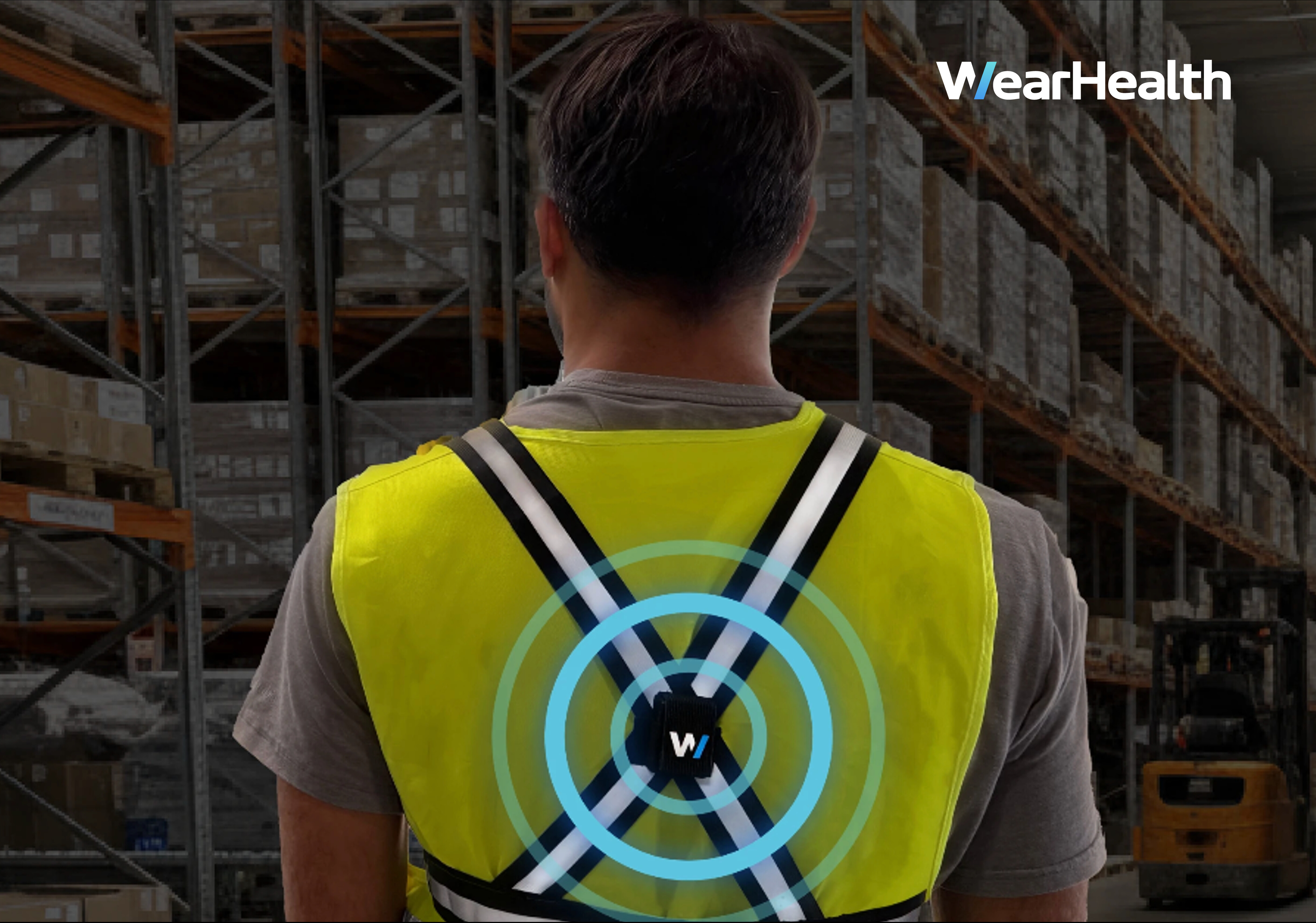
Ergonomics has been part of industrial and logistics workplaces for decades. Guidelines exist, training programs are widespread, and awareness is generally high. Yet musculoskeletal disorders (MSDs) remain one of the leading causes of injuries and absenteeism across physically demanding industries.
This contradiction raises a fundamental question:
If awareness is high, why do outcomes remain poor?
In our work with industrial and logistics teams, we rarely encounter a lack of understanding when it comes to ergonomic principles. Most organizations know what “good ergonomics” looks like on paper.
The real gap appears elsewhere:
between what people know and what actually happens under real working conditions.
Daily operations are shaped by time pressure, productivity targets, routine, and fatigue. In these environments, behavior is guided far less by intention than by repetition. Any prevention strategy that does not account for this reality struggles to create lasting impact.
Ergonomic risk rarely results from a single extreme event. It accumulates through small, repeated movement decisions made hundreds of times per shift.
Traditional measures such as training sessions or one-off interventions can raise awareness, but they do not influence these moment-to-moment decisions during real work. Without continuous, situational feedback, people naturally revert to familiar movement patterns — even when they know better.
This is why we believe ergonomics must be approached as a behavioral challenge, not just a procedural one.
Many ergonomics programs treat prevention as an add-on: something layered on top of existing processes. In practice, this often leads to friction, low adoption, or short-lived effects.
A different approach is needed — one that embeds prevention into daily work rather than interrupting it. When feedback becomes continuous and context-aware, learning happens naturally. Healthy movement patterns are reinforced through repetition, not reminders.
This shift turns ergonomics from a reactive response into a proactive, ongoing capability.
Across industry and logistics, we are seeing a growing focus on workforce stability, absenteeism, and long-term operational resilience. Ergonomics is increasingly recognized as a structural factor influencing productivity and retention — not merely a compliance topic.
We recently shared our perspective on behavior-based ergonomics and prevention in an article published on PresseBox in connection with LogiMAT 2026.
👉 Read the article here.
The increased visibility of these topics reflects a broader shift: organizations are actively searching for approaches that work under real operational conditions.
These questions around behavior, prevention, and everyday work reality will also be part of the conversation at LogiMAT 2026.
We will be at LogiMAT in Stuttgart to exchange perspectives on how ergonomics can move from guidelines to daily practice — with a focus on behavior change, employee acceptance, and measurable impact.
📍 LogiMAT 2026
📍 Hall 7, Stand A06
If you are attending LogiMAT and are interested in discussing how ergonomic risk, injuries, and absenteeism can be reduced without adding complexity to daily operations, we look forward to connecting.
Ergonomics does not fail because people lack awareness.
It fails when systems rely on memory, intention, and occasional intervention.
Sustainable prevention requires continuous support where behavior actually happens — embedded into everyday work rather than layered on top of it.
If you would like to explore behavior-based approaches to ergonomics and prevention in more detail, you can find further insights and contact options at:
👉 https://www.wearhealth.com
Behavior-based ergonomics focuses on how people actually move and behave during daily work. Instead of relying solely on training or guidelines, it supports continuous learning through feedback in real working conditions, helping to reduce ergonomic risk over time.
Traditional ergonomics measures typically raise awareness but do not accompany employees during real work situations. Under time pressure and routine conditions, people tend to revert to habitual movement patterns. Without continuous, situational feedback, sustainable behavior change rarely occurs.
MSDs usually do not result from single incidents. They develop through repetitive movements, poor posture, and cumulative strain over time. These risks are closely linked to everyday behavior rather than isolated extreme events.
Injury prevention depends on what happens moment by moment during work. When healthy movement patterns are reinforced continuously, ergonomic risk can be reduced proactively, leading to fewer injuries, lower absenteeism, and greater workforce stability.
More Insights
August 18, 2026
How can warehouse managers determine whether an ergonomics tool will work in their operation? Learn how to evaluate solutions through real-world pilots, usability, workflow integration and privacy.
August 17, 2026
What can manufacturers learn from Nissan’s investment in ergonomics? Explore why physical workload is becoming an important part of production and workstation design.
